NIS2 CER Directive Overlap: Critical Entities Are Essential at Any Size
A regional drinking water supplier with 35 staff and a turnover well under €10 million sits below every NIS2 size threshold. Its MSP told the board last year that the directive did not apply. Then a letter arrives from the ministry: the supplier has been identified as a critical entity.
That letter changes the answer. Where NIS2 and the CER Directive meet, size stops mattering, and the client lands in the strictest NIS2 category on the day it is designated.
What the NIS2 CER Directive link actually says
Two sentences in Directive (EU) 2022/2555 do the work.
Article 2(3): "Regardless of their size, this Directive applies to entities identified as critical entities under Directive (EU) 2022/2557."
Article 3(1)(f) then lists, among the essential entities, "entities identified as critical entities under Directive (EU) 2022/2557, referred to in Article 2(3) of this Directive".
So the chain is short. A national authority identifies an organisation as a critical entity under the Critical Entities Resilience (CER) Directive. NIS2 then applies, with no headcount or turnover test. And the entity is essential, not important.
Most scope checks start with sector and size. This route skips the size question entirely, which is why it catches small utilities, regional hospitals and niche infrastructure operators that a standard scoping exercise rules out. If you use a size-based checklist such as the one in Does NIS2 apply to my organisation?, add one question at the top: has the client received, or does it expect, a CER designation?
CER and NIS2 cover different risks for the same entity
The two directives were adopted on the same day and are designed to interlock, not overlap.
CER deals with physical, non-cyber resilience: natural hazards, sabotage, terrorism, insider threats, supply disruption. Article 1(2) of CER excludes matters covered by NIS2. Cybersecurity of a critical entity is therefore a NIS2 subject, supervised by the NIS2 authority.
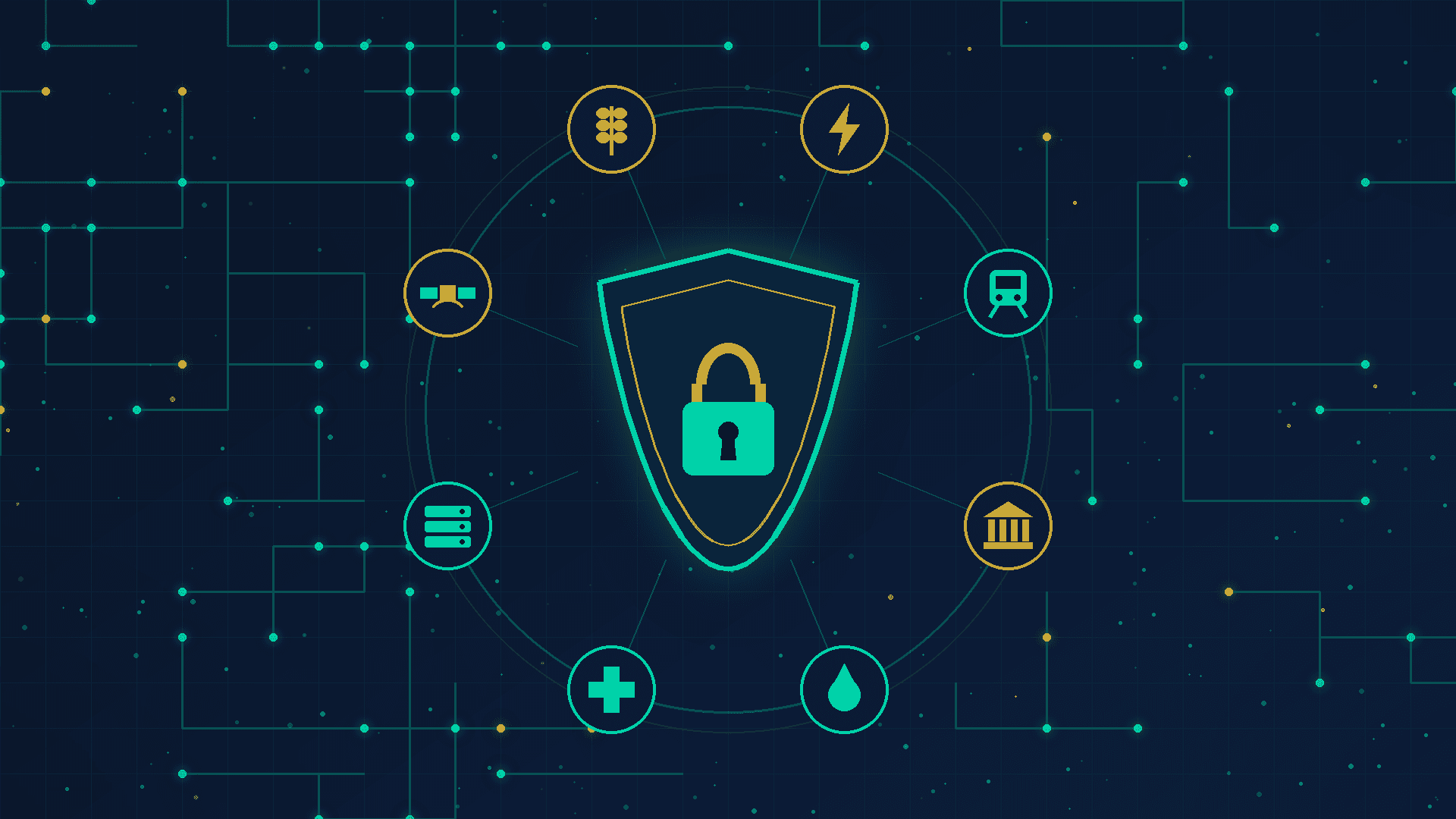
CER covers eleven sectors: energy, transport, banking, financial market infrastructure, health, drinking water, waste water, digital infrastructure, public administration, space, and food.
The core CER duties for a designated entity:
- A risk assessment within nine months of the notification, repeated at least every four years (Article 12).
- Technical, security and organisational resilience measures, described in a resilience plan, plus a designated liaison officer (Article 13).
- Incident notification to the competent authority: an initial notification within 24 hours of becoming aware, and a detailed report no later than one month after that (Article 15).
Three sectors are treated differently. For banking, financial market infrastructure and digital infrastructure, Article 8 switches off the CER resilience and supervision chapters, because DORA and NIS2 already cover them. A data centre operator or DNS provider can still be identified as critical, but its substantive obligations stay in NIS2.
The deadline that has already passed
Member States had to identify their critical entities by 17 July 2026 (CER Article 6(1)). They must notify each entity within one month of identifying it, and the CER resilience obligations apply from ten months after that notification (Article 6(3)).
That means designation letters are, or should be, in circulation now. In practice the picture is uneven, as it was with NIS2 itself:
- Netherlands: the Wet weerbaarheid kritieke entiteiten has been in force since 15 August 2026, alongside the Cyberbeveiligingswet. The government expects roughly 500 organisations to be designated.
- Germany: the KRITIS-Dachgesetz has been in force since March 2026. Detailed thresholds depend on an implementing ordinance, and we could not confirm that it has been issued.
- Italy: Legislative Decree 134/2024 has applied since October 2024. The official list of critical entities was due by 17 July 2026 and is not public.
- Poland: the amended Crisis Management Act entered into force on 4 July 2026. Authorities have nine months from that date for the first identification round.
- France: the Résilience bill, which transposes both CER and NIS2, is in first reading at the Assemblée nationale, with a formal vote scheduled for 17 November 2026.
- Spain: the government sent its critical entities bill to parliament in March 2026. We found no confirmation that it has been adopted.
The CER grace period matters for planning. An entity gets ten months to meet CER duties after notification. NIS2 contains no matching transition period for an entity that becomes essential through designation. National law may add one, so check it per country, but do not assume it.
What changes when a small client becomes essential
Three things change at once.
Supervision. Essential entities are subject to proactive supervision: audits, on-site inspections and evidence requests without a prior incident. Important entities are supervised after the fact. The difference is explained in Essential vs important entities under NIS2.
Two authorities that talk to each other. Article 13(5) of NIS2 requires NIS2 and CER authorities to cooperate and exchange information regularly on the identification of critical entities and on risks, threats and incidents affecting them, cyber and non-cyber. Under Article 32(9), the NIS2 authority informs the CER authority when it uses its supervisory powers against a critical entity, and the CER authority may ask the NIS2 authority to act. A finding in one regime will reach the other.
The fine ceiling. Article 34(4) requires Member States to provide, for essential entities, maximum fines of at least €10 million or 2% of total worldwide annual turnover, whichever is higher. For a 35-person utility the percentage is irrelevant. The fixed amount is not. CER itself sets no figure; Article 22 only requires penalties to be effective, proportionate and dissuasive, so the CER amounts differ per country.
NIS2 Penalty Escalation — Beyond the Fine
Trigger event
Non-Compliance Detected or Incident Occurs
A supervisory authority identifies a compliance gap or an organisation fails to meet NIS2 requirements
Compliance orders with binding deadlines
Mandatory security audits at your expense
Public disclosure of violations
Binding instructions on specific security measures
Suspension of certifications or operating licences
Temporary ban on management functions for individuals
Public naming of responsible natural persons
One incident can start two clocks
A flood that takes out a pumping station and its control systems is a CER incident. If it also significantly disrupts network and information systems, it is a NIS2 significant incident as well. Each regime has its own 24-hour first notification, to its own recipient.
Article 21(2) of NIS2 already requires an all-hazards approach that protects systems and their physical environment, so much of the groundwork is shared. We covered that in NIS2 physical security and the all-hazards rule. What is not shared is the reporting line. Put both recipients, both deadlines and one decision-maker in the same incident procedure.
What MSPs should do now
- Ask every client in the eleven sectors about designation. A yes, or a "we were consulted", moves them to the top of your list.
- Re-run scope for small clients you ruled out on size. The size test does not apply to designated entities.
- Treat the designation date as day one for NIS2. Registration, the Article 21 measures, management approval under Article 20 and incident reporting apply as for any essential entity. To see where such a client stands on the ten measures, run a free readiness scan.
- Build one risk assessment, two outputs. The CER risk assessment and the NIS2 risk analysis can share an asset inventory, dependency map and scenario set. Keep the reports separate, because the authorities are.
- Map the reporting lines. One page: which incident goes to which authority, within how many hours, decided by whom.
- Check your own contract. A critical entity must manage its suppliers. Expect questions about your own security measures and personnel.
A designation letter is not a cybersecurity document, and the person who receives it may not forward it to IT. Make sure your clients know that when it arrives, you need to see it the same week.
Still have a question?
Answers are generated from our articles and are not legal advice. Do not enter personal or confidential data.